Spiders: The Good, the Bad, and the Ugly

The Good:

Spiders are a natural controller of pests and insects. They are very beneficial predators and they serve a significant role in keeping populations of many pests in check.  Without spiders, our world would be over-run by other insects. Most spiders are non-aggressive, and very few spiders have fangs capable of penetrating human skin- only about 200 species from 20 genera of spiders have bites considered dangerous to humans.

Grass spiders are an example of what could be considered a “good” spider. They are very common in Pennsylvania, and they can be recognized by the large, somewhat concave sheet-like web with a funnel or tunnel located off to one side. They are very beneficial predators, they rarely leave their webs, and they don’t often enter homes.

Grass Spider

Grass Spider

The Bad:

The Brown Recluse is a fitting example of the bad side of spiders. While they are rarely aggressive, when they do bite, it is seriously venomous. The brown recluse bears a potentially deadly hemotoxic venom- hemotoxins destroy red blood cells. One of the main characteristics of a typical bite is a hard and sharp sensation on the skin, followed by intense pain and swelling. The brown recluse spider is resilient, and can tolerate up to six months of extreme drought and scarcity or absence of food.

Brown Recluse Spider

Brown Recluse Spider

The Ugly:

The Black Widow spider is notoriously the worst of the worst when it comes to spiders. Their bite is feared because its venom is reported to be 15 times stronger than a rattlesnake’s. In humans,

black widow spider

black widow spider

bites produce muscle aches, nausea, and a paralysis of the diaphragm that can make breathing difficult. They are easily distinguished by the red hourglass on the back of their jet-black body. It is believed that the Black Widow spider was given that name based on the observation that some female black widow spiders have been known kill and feed upon their mates.

Utah Cabin Receives Uninvited Guests of 60,000 Bees

In Eden Utah, Vic Bachman witnessed the largest beehive he had ever seen in his beekeeping career. With 12 feet in length, Vic Bachman removed a colossal beehive in the eaves of a cabin in Ogden Valley.

Beekeeper in Utah

Beekeeper in Utah

“We figure we got 15 pounds of bees out of there,” said Bachman, who said that converts to about 60,000 honeybees. Bachman was called to the A-frame cabin last month in Eden, Utah. While removing a panel that hid roof rafters, he had no idea he would fine honeycombs packed 12 feet long, 4 feet wide and 16 inches deep.

The enclosed honeybees had been making the cavity their home since 1996, while hardly bothering the homeowners. The cabin was rarely in use, but when the owners need to occupy it while building another home nearby, they decided it wasn’t safe for their two children. A few bees had found their way inside the cabin and the hive was just outside the children’s bedroom so it was best to call the beekeeper, as they didn’t want to kill the honey bees, while recognizing a species in decline that does yeoman’s work pollinating flowers and crops.

So they called Bachman, owner of Deseret Hive Supply, a hobbyist store that can’t keep up with demand for honeybees. Bachman used a vacuum cleaner to suck the bees into a cage. “It doesn’t hurt them,” he said. “It’s the biggest one I’ve ever seen,” he said. The job took over six hours and the bill came to a scouring $600. “The bees were expensive,” said Paul Bertagnolli, the cabin owner, yet he was satisfied with the job.

Utah calls itself the Beehive state, a symbol of nature’s conscientiousness. Whether this was Utah’s largest beehive is unknown, but Bachman said it would rank high. Honey bees are gentle creatures unlike their foe yellow jackets and hornets, which attack rip apart and destroy the honeybee. Most people never get stung by a honey bee as they seek and collect nectar and come back to their respective hive.

The hive is now in the beekeeper’s backyard and is reportedly doing well.


They’re back: 17-year Cicadas to Swarm from Georgia to New York

You probably haven’t seen them before. For the past seventeen years, cicadas were submerged underground. Well get ready, the “17-Year” cicadas are about to re-emerge along much of the East Coast to begin their remarkable life cycle.

Confirmed Cicada Sightings

Confirmed Cicada Sightings

This year marks the emergence of a colossal number of the so-called 17-year cicada. We may all know them from their distinctive black bodies and green wingspan along with bulging black eyes and freakishly veiny skin. The emergence will span much throughout the U.S. east coast, from Georgia to upstate New York., roughly a 900-mile radius.

In central Connecticut, particularly dense concentrations of so-called Brood II cicadas, named Magicicads septendecim, should arrive between May and June, says Chris Maier, entomologist with the Connecticut Agricultural Experiment Station in New Haven. Maier has tracked the emergence of Cicadas since 1979 and again in 1996. He said they are next due in 2030, when he will be 81 years old. Maier also explained the first scientific recording of Brood II specimens was in 1843.

Veiny 17-year Cicada

Veiny 17-year Cicada

The arrival of the 1.5inch herbivores, flying adults occurs after a lengthy period of development underground as juveniles. After the maturing stage, males begin what cicadas are best known for: their acoustic mating signals or “songs.”

“When there’s a lot of them together, it’s like this hovering noise. It sounds exactly like flying saucers from a 1950s movie,” Chris Simon, professor of ecology and evolutionary biology at the University of Connecticut. So how exactly do they conduct their choir? To create their bizarre choruses, the male cicadas use ribbed tymbal membranes on their abdomens to produce the sounds, while females – lacking tymbals – click or snap their wings.

When they suddenly emerge, the cicadas will be visible “on the sides of the trees, on the sides of the house, on the shrubbery – even on the car tires,” said Simon.

One theory behind their unique life cycle is that their emergency generates such an overwhelming colossal number that predators, such as birds, spiders, dogs and other insects can’t eat them all at once.

Although they may sound harmful, cicadas do not sting or bite and they aren’t harmful to crops. However, they may cause damage to young, smaller trees and shrubs if too many feed from the same vegetation or lay eggs in their twigs according to research published at www.magicicada.org.

Every 17th year, prior to their re-emergence, the cicadas build a tunnel exit to the surface. Once the soil temperature exceeds 64 degrees Fahrenheit the nymphs leave their burrows after sunset and settle on a nearby tree or shrub to being their final stage of adulthood.

To learn more about Cicadas and other green industry news visit our blog at www.greenpestsolutions.com/blog.


Green Lawn Fertilizing #1 Reviewed & Rated Independent Lawn Care Company in Philadelphia Tri-State Area.

According to the Delaware Valley Consumer Checkbook, Green Lawn Fertilizing ranks as the number 1 Reviewed and Rated Independent Lawn Care Company in the Philadelphia Tri-State area.

Green Lawn Fertilizing, a local lawn and pest control company, was featured on 6ABC Philadelphia’s segment “How to find the right lawn care for your money.” There article and clip focuses on how to research the proper lawn care company and how to grow a perfect green lawn with their services.

6ABC Philadelphia

6ABC Philadelphia

According to Amy Buckman of 6ABC, “The folks at the Delaware Valley Consumer Checkbook have done the research, but even if you’re choosing from among the companies they found had high-quality ratings from customers, Executive Editor Kevin Brasler suggests getting at least four estimates.”

The Delaware Valley Consumer Checkbook reveals the Delaware Valley area’s service companies and stores rated best and worst for quality, reviews and prices. Checkbook found prices can vary a lot among companies. Even for the same size lot, with the same stated customer goals, undercover shoppers were quoted prices ranging from $448 up to $1,717. At Green Lawn Fertilizing, our lawn care programs start as low as $223.

According to the Delaware Valley Consumer Checkbook, Green Lawn Fertilizing is reviewed and rated more than any other Independent Lawn Care company in the Philadelphia Tri-State area amongst 131 Lawn Care Companies. In total, Green Lawn Fertilizing is rated and reviewed third most behind Scotts and TruGreen. The snippet goes on to mention the priorities of the individual consumer and how they should be presented to the lawn care professional. For example, some consumers may want a pesticide free lawn whereas other consumers just want a weed-free lawn. It’s imperative when speaking with a lawn care professional to express these priorities to them.

And don’t forget… Lawn Care season has just started! Mention you saw us on 6ABC and get 2 Free Insect Control Applications this summer AND receive 10% off your entire lawn care package!

Green Industry Amongst Top Outdoor Jobs

Fox Business named the profession of “pest management technician” on a list of jobs to help “escape the office.”

Being stuck inside the office all day can be quite the nuisance. That’s why Fox Business recently put together a list of “Eight Outdoor Jobs to Help You Escape the Office,” and landing smack in the middle was the profession of pest control technician.

Pest Control Technician

Pest Control Technician


As we all now, everywhere in the country has a need for pest and termite control, from Bed bugs to Mosquitoes to Stink bugs - They are all over and are literally a nuisance. According to Fox Business: “According to Jim Fredericks, director of technical services at the Fairfax, Va.-based National Pest Management Association, pest management technicians typically earn $13 to $20 per hour, depending on experience, and are employed mainly by small, independent companies.

“Every area of the country has pests to contend with, whether those pests are bedbugs or roaches,” Fox Business wrote. “The pest control field is one of those outdoor jobs that’s projected to grow at a rate of 26 percent from 2010 to 2020, which is faster than the average occupation.”

Also on the list were: Landscape Architects, Recreation Workers, Archeologist, Surveyors and Environmental Scientists. Read the full list here.

Enormous Tarantula Discovered in Sri Lanka

A large species of tarantula, roughly the size of an adult human face, has been discovered on the island nation of Sri Lanka. It boasts a leg span of 8 inches and holds enough venom to kill lizards, mice, snakes, and even small birds. The venom of this massive tarantula (Poecilotheria rajaei) is not lethal to humans.

Enormous Tarantula Discovered

Enormous Tarantula Discovered

The thought of a venomous spider the size of a dinner plate would be enough to give even the mildest arachnophobes the creeps, but many scientists consider this tarantula to be extremely fascinating and have made it the subject of considerable study.

These studies have focused on determining just how rare the newly discovered spider is, and if it really is a new species native to Sri Lanka. There is concern that the increasing habitat destruction is causing their numbers to decline. “They prefer well-established old trees, but due to deforestation the numbers have dwindled, and due to lack of suitable habitat they enter old buildings.” said Ranil Nanayakkara, co-founder of Sri Lanka’s Biodiversity Education and Research.

The spider was first officially discovered in 2009 when a local villager brought a dead male specimen to the team of scientists.

Natural “Green” Ant Remedies

Nowadays, people strive to keep pesticides out of their homes to keep their family and pets safe. For certain insects and pests there are some “Do It Yourself” remedies to combat these nuisances. Right now, it’s the beginning of Ant season. Whether you’re willing to admit it or not you will see ants—inside or outside your home. Here are some natural remedies to combat help rid ants.

  1. General upkeep and cleanliness – Now that the weather is getting warmer and spring is finally here—so are ants. The number one “natural” step is prevention. Especially in places like a kitchen, you want to be certain you are keeping this area clean and dry. Furthermore, you want to make sure you have all food stored away tightly in your cabinets. You must keep your sinks and counters dry and clean at all times to prevent ants. With spring in full force pavement ants and carpenter ants are reproducing by the millions. It’s one thing for there to be some pavement ants outside on the driveway, however, if that massive mound of ants starts moving inward into your home you will have a problem and you will need to call a local exterminator.
  2. Garlic Cloves and Cinnamon SticksGarlic Cloves and Cinnamon Sticks have shown to help rid ants. If you place these aromatically pleasing items by the
    Cinnamon and other spices can help rid Ants

    Cinnamon and other spices can help rid Ants

    window cracks and corners around your home this will help rid ants. If you are finding ants by the pantry it’s a great idea to stick a couple cinnamon sticks around the pantry for extra protection—and it smells good!

  3. Vinegar Placing white or apple cider vinegar in a spray bottle and spraying the infested areas where you have ants might help. The fungicidal properties of the vinegar can help prevent ants. This remedy has also been found to help rid fruit flies.
  4. Black Pepper Sprinkling black pepper where you see ants can help with an ant infestation.
  5. Boiling Water For large anthill mounds, pour boiling hot water over them. It may be a bit cruel, but if you are one that absolutely doesn’t want pesticides than this is an option.
  6. Mint Mint destroys the smelling capabilities of ants and also helps minimize the chances of them entering your home. You can use this method in several ways. You can plant mint around your home especially near entries and exits. You can also plant Mint near where you see the Anthills. If ants are in your pantry, place mint leaves on the shelves of the pantry.

Other Plants – Here is a list of some other plants which have been known to be effective at warding off ants. The idea is the stronger the smell, the more likely the plant is to keep the ants away: Basil, Chili peppers, Eucalyptus, Garlic, Lavender, Peppermint, Rosemary, and Thyme.

Persistence is the key when trying natural ant control remedies. If one of these methods doesn’t work for you, then try another. You can also refer to the natural baiting stations offered by Green Pest Solutions. For those massive ant mounds and any other pest infestation please don’t hesitate to call Green Pest Solutions. We would be more than happy to give you a Free in-home evaluation for most pest concerns including Ants and Termites!


April is National Pest Management Month

Ants, spiders, fleas, mosquitoes, termites, bed bugs, roaches, rodents - these are just a few of the harmful pests and insects that pest professionals deal with every day. Their knowledge and use of Integrated Pest Management play a huge part in preventing these pests from destroying homes, spreading illness and disease, and contaminating food.

“The NPMA is pleased to have the opportunity to publicly recognize the important work that pest professionals do every day during National Pest Management Month,” says Missy Henriksen, vice president of public affairs for the NPMA. “In honor of National Pest Management Month, the NPMA is dedicated to raising public awareness about the risks posed by household pests and encouraging homeowners to take proactive steps to prevent pest infestations in their homes and properties.”

Meet our Team:

Green Pest Solutions 100 years experience

Green Pest Solutions 100 years experience

From all of us here at Green Pest Solutions, we would like to extend a big thank you to all of our technicians. Their knowledge, integrity, hard work, and positive attitude are what make us a great company with happy pest-free customers!

Pest Facts: Weird But True

There are many household pests that you may be familiar with, but you may not know some of these strange but true facts about them.

House Centipedes: Centipedes are well known because of their large amount of legs (from under 20 to over 300) but did you know that their front legs aren’t actually used for mobility; they form into venomous fangs which the centipedes will use to inject venom and paralyze their prey!

Centipede

Centipede

Millipedes: Based on certain fossil evidence, it is believed that millipedes may have been the first animals to breathe air, and to make the move from water to land. A millipede fossil found in Scotland actually dates back 428 million years!

Stink bugs: The brown marmorated stink bug was first discovered in Eastern PA in 1998, but it is actually native to Japan, Taiwan, China, and South Korea. The most common theory to their arrival into the U.S. is that they were brought in by smuggling themselves into shipping crates.

Stink Bugs

Stink Bugs

Crickets: When you think of crickets the first thing that may come to mind is their infamous chirping sound, which is used to attract females, but who knew that they may be a symbol of good luck and prosperity? Many cultures folklore and mythology involve crickets. In Brazil, cricket songs are told to be signs of impending rain. Some Asian countries keep crickets as house pets in cages as they believe they bring good luck.

Mosquitoes: Mosquitoes have killed more humans than all of the wars in history.

Mosquitoes

Mosquitoes

Ants: An ant is capable of lifting fifty times its own weight and is capable pulling thirty times its own weight.

Fleas: A flea can jump about two hundred times the length of their body, which is about thirteen inches. This is the equivalent to a six foot tall human jumping nine hundred feet.

Featured Creature: Ants!

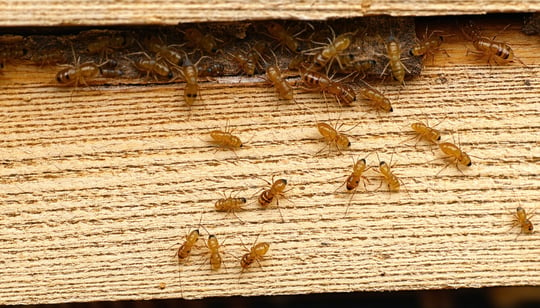
It may come as no surprise that ants have been deemed the #1 nuisance pest in America. After all, who hasn’t had a run in with one of these pesky little critters on your kitchen counter, on your bathroom sink, or found a big colony of them out on your sidewalk?

The 3 most prevalent species of ants in Pennsylvania are Odorous House Ants, Pavement Ants, and Carpenter Ants.

Pavement Ants:

Pavement Ants are a little bit larger than Odorous House Ants, generally about 1/8 inch

Pavement Ant

Pavement Ant

in length. They invade buildings to forage for food throughout the year, but they do not colonize in homes. Their nests are outdoors under stones, along curbs, or pavement cracks. Pavement Ants are omnivorous, but they prefer greasy and sweet foods.

Carpenter Ants:

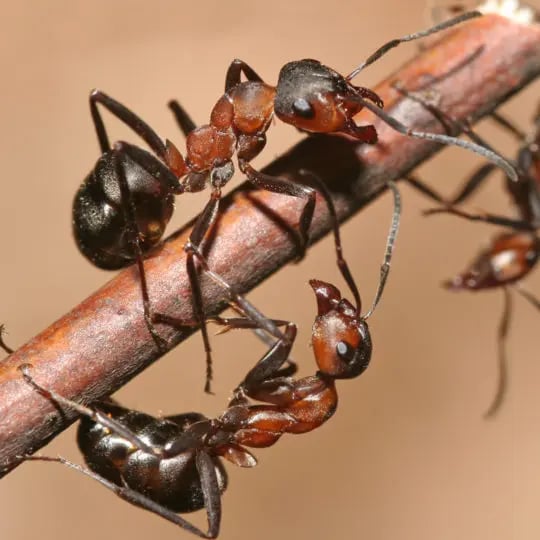
Carpenter Ants are very important insects when it comes to the balance of nature, as

Carpenter Ant

Carpenter Ant

they burrow and nest in dead trees and logs, helping to enhance the decay of wood. However, this practice can cause extensive structural damage when a carpenter ant colony invades your home and is left untreated. Carpenter ants do not consume wood, as they are not able to digest cellulose, they hollow out wood to create galleries to colonize and nest.

Odorous House Ants:

The odorous house ant gets its name from the strong, rotten coconut-like smell it emits

Odourous House Ant

Odourous House Ant

when crushed. They like to eat sweets, preferably melon. They typically live for several years, making their home in exposed soil and wall cracks. They do not pose a health risk, but care should be taken to prevent and eradicate them as they can contaminate food.

 All of these ants, however persistent they may seem, can be easily controlled with an effective Integrated Pest Management program. Call Green Pest Solutions at 610-441- 9200 to schedule a free inspection or speak with one of our knowledgeable and friendly pest control professionals!