
Spring Ant Prevention in PA, NJ and DE
Yard and Home Tips That Work
As soil warms in early spring, ant colonies become active and send out workers to look for food and water. If your yard gives them shelter and easy pathways to the house, those scouts can quickly turn into steady trails into kitchens and bathrooms.
The biggest reason this happens is simple: your yard can make it easy for ants to reach your home.
Common Outdoor Conditions That Attract Ants
-
Tree limbs, shrubs, and vines touching siding or the roof
-
Leaf piles and old mulch near the foundation
-
Clutter or stored items close to the house
-
Damp, shaded areas that stay moist
The best prevention starts outside.
Remove hiding places, reduce moisture, and make it harder for ants to reach the structure.
Outdoor Ant Prevention: Plants, Mulch, and Yard Cleanup
Focus on three main areas:
1. Vegetation
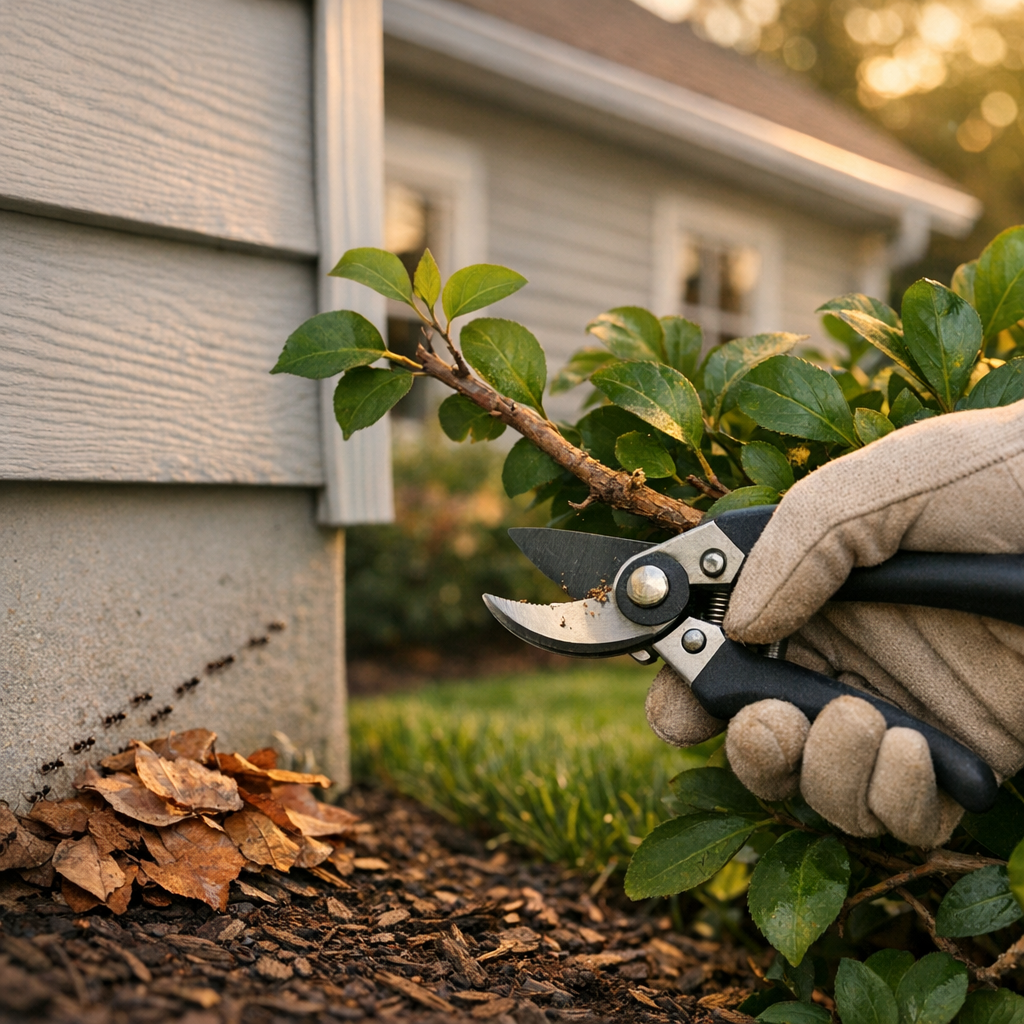
Trim trees and shrubs so branches stay at least six inches away from siding and the roofline. This forces ants to cross the ground instead of moving directly from plants onto your home.
2. Mulch and soil
Keep mulch and soil from touching your siding. A 6–12 inch band of bare soil, stone, or edging creates a drier area that ants and other insects are less likely to use for nesting.
3. Debris and stored items
Clear away anything that gives ants shelter near the foundation, including:
- Leaf piles
- Old plant material
- Firewood
- Decorative stone
- Soil bags or stored outdoor items
Move these a few feet away from the house whenever possible.
Indoor Protection: Seal Entry Points and Remove What Ants Want
Indoor prevention is about two things:
-
Blocking entry
-
Removing food and water sources
Seal common entry points
Check for cracks and gaps around:
-
Windows
-
Doors
-
Utility lines
-
Hose bibs
-
Dryer vents
-
Baseboards
-
Plumbing penetrations
Use exterior caulk, weatherstripping, or other sealing materials to close small openings.
Reduce food and moisture indoors
Ants are more likely to stay when they find easy rewards. Help prevent that by:
-
Storing sugar, cereal, snacks, and pet food in sealed containers
-
Wiping counters and cleaning under appliances
-
Cleaning spills promptly, especially sugary ones
-
Fixing leaky faucets and pipes
-
Emptying and cleaning pet water bowls regularly
-
Reducing humidity in kitchens, bathrooms, and basements
Landscaping Habits That Invite Ants Closer
Some common yard habits can increase ant activity around the home.
Watch out for:
-
Dense shrubs planted tight against the house
-
Leaf piles or branches along exterior walls
-
Deep mulch against the foundation
-
Bags of soil, mulch, or clippings stored near the home
-
Overwatering around the foundation
Better alternatives
-
Thin shrubs to improve airflow
-
Use a narrow gravel or stone border near the house
-
Keep mulch shallow and away from siding
-
Store yard materials away from the foundation
-
Avoid keeping soil constantly damp near the home
When DIY Ant Prevention is Not Enough
Sometimes cleanup and sealing are not enough. Professional help may be the right next step if you notice:
-
Ants returning again and again
-
Persistent trails in kitchens or bathrooms
-
Signs of activity inside walls or under slabs
-
Sawdust-like material
-
Rustling sounds in walls
-
Winged ants indoors
A trained technician can:
-
Identify the ant species
-
Locate nests
-
Use targeted baits and non-repellent treatments
-
Spot property conditions that may be easy to miss
Simple Spring Ant Checklist
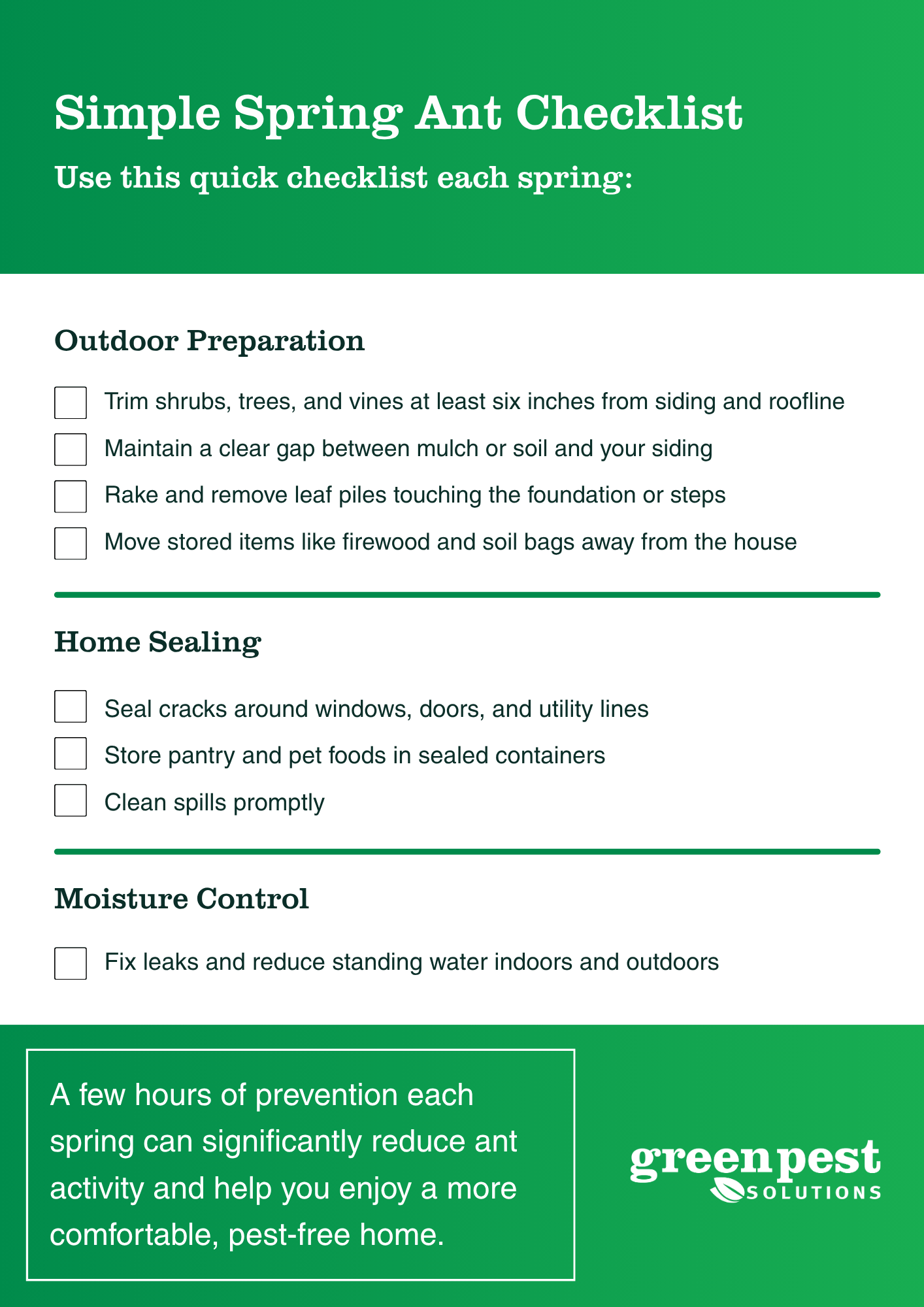
Use this checklist each spring to prevent ant invasions:
-
Trim shrubs, trees, and vines at least six inches from siding and roofline
-
Maintain a clear gap between mulch or soil and your siding
-
Rake and remove leaf piles touching the foundation or steps
-
Move stored items like firewood and soil bags away from the house
-
Seal cracks around windows, doors, and utility lines
-
Store pantry and pet foods in sealed containers
-
Clean spills promptly
-
Fix leaks and reduce standing water indoors and outdoors
A few hours of prevention each spring can significantly reduce ant activity and help you enjoy a more comfortable, pest-free home.