
Mosquitoes vs. Crane Flies: What Homeowners Should Know
How to tell mosquitoes and crane flies apart in your yard
Mosquitoes are small, biting insects that can spread disease, while crane flies are larger, long-legged insects whose adults are mostly harmless, but whose larvae can cause damage to your lawn. Telling them apart helps you understand if you are facing a health concern or a potential lawn problem.
If you have ever seen an insect that looks like a mosquito the size of your hand, it was almost certainly a Crane Fly. Adult crane flies often have very long, delicate legs and a narrow body that can make them look like oversized mosquitoes. Mosquitoes, by comparison, are much smaller, with a more compact body and shorter legs.
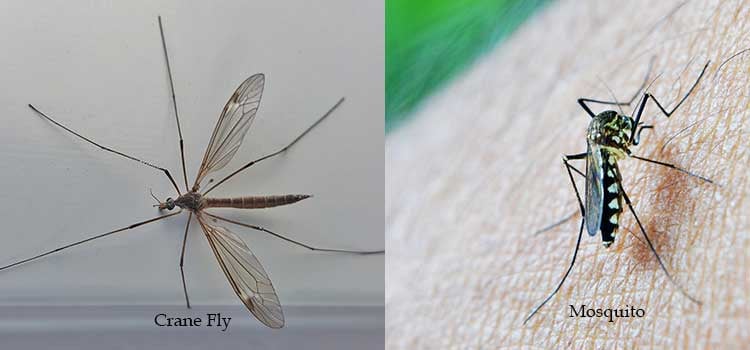
One of the most important differences is how they behave around you. Female mosquitoes bite because they need blood to develop eggs. You will usually notice them hovering close to your skin, especially around your ankles, arms, and neck. Crane flies, on the other hand, are clumsy fliers that seem to bounce off walls, windows, and porch lights. They may land on you, but they do not bite.
You can also look closely at where you are seeing the insects. Mosquitoes often linger in shady, humid spots and near standing water such as birdbaths, clogged gutters, or puddles. Crane flies are also attracted to moist areas, but you will commonly notice them resting on walls, doors, and windows in the evening when they emerge from lawn areas.
From a health standpoint, mosquitoes are the main concern because of their bites and the diseases they can spread. Public health agencies like the Centers for Disease Control and Prevention regularly warn homeowners to remove standing water to limit mosquito breeding. Crane flies do not spread disease, and many adult crane flies do not feed at all. However, the story changes when you think about what is happening under the surface of your lawn.
How crane fly larvae can quietly damage a healthy lawn
Crane fly larvae, live in the soil and feed on grass roots and lower stems, which can thin out turf and create brown patches, especially in cool, wet conditions. While adults are mostly harmless above ground, their larvae can slowly weaken a lawn from below.
As the larvae feed on grass roots, you may start to notice your lawn looking thin or patchy in certain spots. Areas that once looked full and green can turn yellow or brown. The turf may feel loose underfoot and pull up more easily because the root system has been weakened. In some regions, gardening organizations have reported that crane fly larvae can cause significant damage after a wet autumn or spring when soil stays saturated for long periods.
Bird activity can be another sign. If you suddenly see birds pecking and tearing at the turf in concentrated areas, they might be feeding on leatherjackets. This extra digging can make the lawn look even more damaged, but it is a signal that something in the soil is attracting them.
Not every lawn with crane fly larvae will suffer severe damage. Healthy, dense turf can often tolerate low numbers. Problems tend to appear when populations are high and conditions are favorable, such as prolonged soil moisture from overwatering, poor drainage, or frequent rainfall. Because the larvae are hidden, it can be helpful to gently peel back a small section of turf and look for them in the top inch or two of soil if you suspect a problem.
If you're still unsure which you're dealing with, feel free to reach out to our team! It's always best to get a professional consultation to protect your home and family.