
Natural Pest Control That Works: Essential Oils & Diatomaceous Earth
Find out what natural pest control methods we recommend!
Essential Oils
Natural pest control with essential oils uses plant-based compounds to disrupt insects’ protective outer layer or breathing system, helping to remove pests in targeted spaces while lowering reliance on traditional chemicals when used correctly and safely.
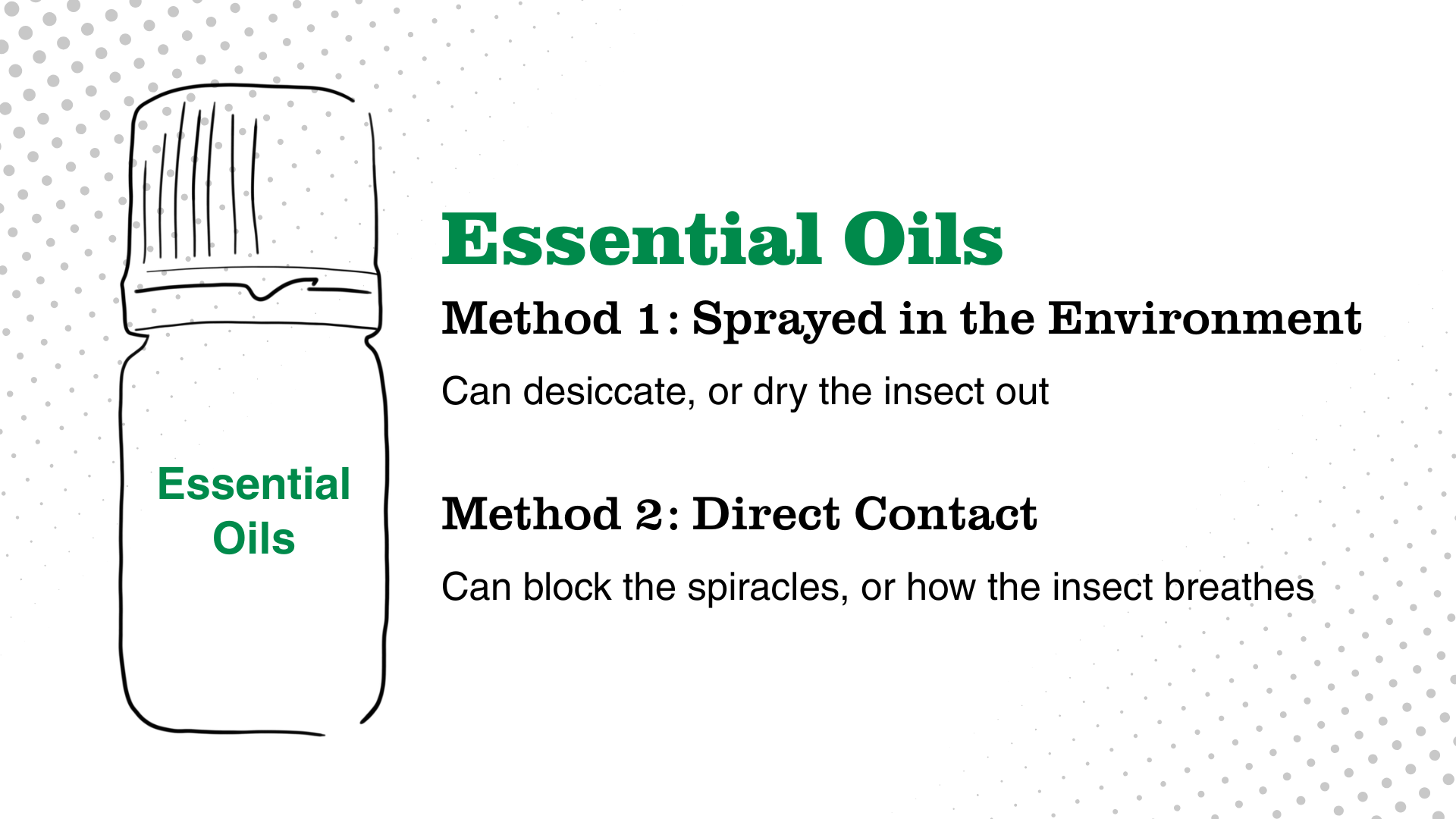
Essential oils can play a role in a more natural approach to pest control, but they are not a one-size-fits-all solution. Different oils work in different ways, and they are most effective only in very specific situations. Understanding how they affect insects helps you set realistic expectations and use them more safely.
Some essential oils work by drying insects out. Many insects have a thin, waxy coating on their exoskeleton that helps them retain moisture. Certain oils strip away this waxy layer. When that barrier is gone, the insect loses water, dries out, and is eventually removed. This process, called desiccation, is not instant; it relies on the environment being dry enough for moisture to evaporate.
Other essential oils work only when they touch the insect directly. These oils can block the tiny openings on the sides of an insect’s body, called spiracles, which insects use to breathe. When those spiracles are blocked, the insect cannot get enough air, and this can remove the pest if contact is thorough. Because of this, simply diffusing or lightly spraying essential oils in the air is usually not enough.
For homeowners, the most important takeaway is that essential oils need correct placement and conditions. A light mist in a humid basement will not perform the same way as a targeted application in a dry crack where pests are hiding. Always test in a small area, keep pets and children away from wet surfaces until they are dry, and follow product directions closely.
Key points about essential oils:
- Work by drying insects out or blocking breathing openings.
- Often require direct contact with the insect to be effective.
- Perform best in dry environments where desiccation can occur.
- Should be used carefully around people, pets, and sensitive surfaces.
Diatomaceous Earth
Diatomaceous earth is a fine powder made from fossilized algae that scratches the protective waxy layer on an insect’s exoskeleton, leading to gradual drying and removal when applied lightly and kept dry.
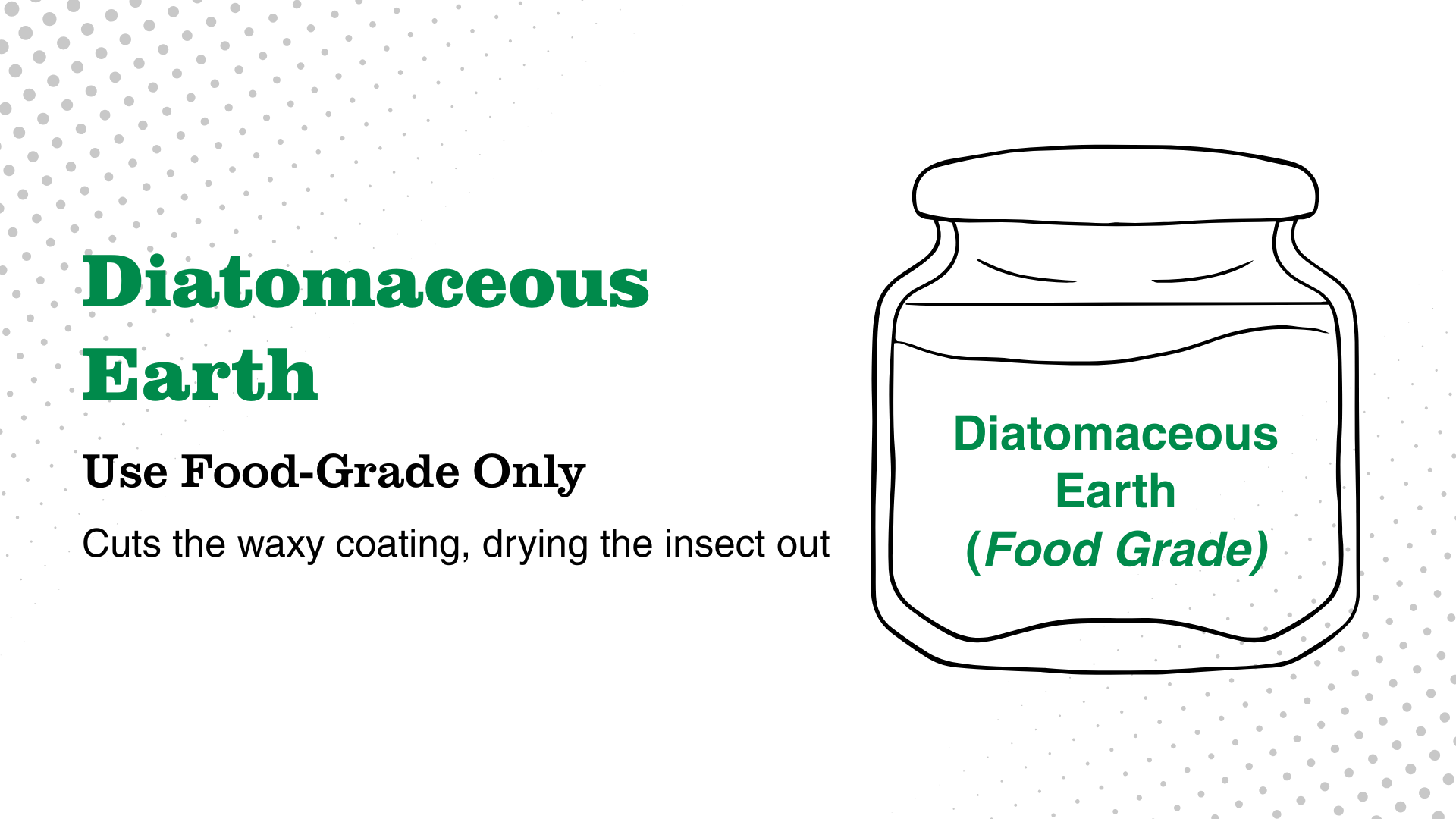
Many homeowners are drawn to diatomaceous earth because it is a mineral-based, non-synthetic option. When used correctly, it can help control certain crawling insects in specific areas of the home. The way it works, though, is very physical rather than chemical, and that matters for how you apply it.
Diatomaceous earth particles are sharp under a microscope. When insects crawl over a thin layer, the particles act like tiny blades, cutting into the waxy coating on their exoskeleton. This coating normally helps the insect hold in moisture. Once that barrier is damaged, the insect slowly loses water and dries out over time. Because this process relies on dryness, moisture is the enemy of diatomaceous earth.
To be useful, diatomaceous earth must stay dry and be applied in a very light, almost dust-like layer. Heavy piles are not more effective; in fact, they can create new concerns. A thick, fluffy layer is easier to disturb and breathe in, which is not safe for people or pets. A light, barely visible coating in cracks, wall voids, and other out-of-the-way spaces is usually the goal.
It is also essential to choose food-grade diatomaceous earth for indoor use. Pool-grade products are processed differently and are not intended for household pest applications. Even with food-grade products, avoid creating dust clouds, use a mask if you are spreading it in enclosed areas, and keep it away from heating and cooling vents where it could circulate.
Key points about diatomaceous earth:
- Choose food-grade products for home use.
- Works only when kept dry; moisture reduces effectiveness.
- Apply as a thin, almost invisible layer, not heavy piles.
- Avoid inhaling dust and keep away from vents and frequently used areas.
When natural options fall short and safety comes first
Natural pest control tools like essential oils and diatomaceous earth can help with light, localized issues, but they have limits, and safety guidelines should always lead your decisions about when and where to use them.
While the idea of controlling pests with natural materials is appealing, these methods are not always enough, especially during a large or fast-growing infestation. Because essential oils and diatomaceous earth rely on direct contact and specific conditions, they often work slowly and may not reach pests hidden deep in walls, ceilings, or structural voids.
In some cases, over-reliance on natural products can delay more complete treatment. Consider the type of pest, the size of the problem, and who shares the space with you and if calling in a professional is the answer.